Typewriters Before 1930
Early typewriter manufacturers experimented with mechanisms that later disappeared from everyday machines. Interchangeable type, curved keyboards and removable typing assemblies offered different answers to the same question: how could a machine place clear, consistent letters onto paper?
Two remarkable machines from 1915 survive in the My Cup of Retro archive. The Hammond Multiplex used rotating type shuttles and a hammer mechanism. The Imperial Model B used a curved keyboard with a removable keyboard and type basket.
From the My Cup of Retro Archive
My Cup of Retro restored and sold both machines while the original shop was operating. Their photographs and recorded details preserve two distinct approaches to typewriter engineering from the early twentieth century.
Explore the Early Typewriter Collection
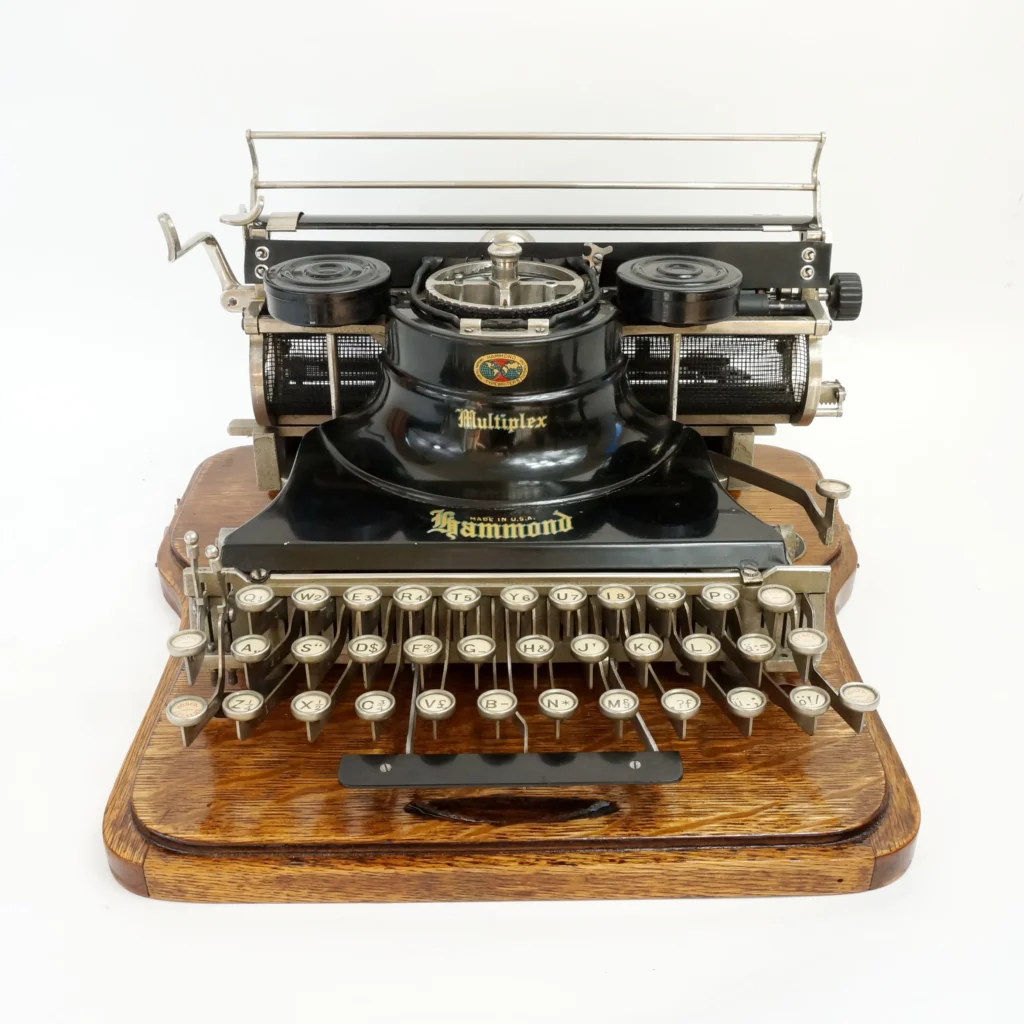
Hammond Multiplex Typewriter, c. 1915
The Hammond Multiplex used a rotating type shuttle and hammer instead of conventional typebars. Its central holder carried two shuttles, allowing the typist to switch between typefaces within seconds.
This restored example has PICA and italic typefaces, a QWERTY keyboard and its original wooden base and cover.
Imperial Model B Typewriter, 1915
The Imperial Model B used a curved QWERTY keyboard and a vertical type basket. Its complete keyboard and typing mechanism could be lifted from the machine for cleaning or replacement.
My Cup of Retro fully restored this example, including its platen. Serial number 12417 was sold with its original metal cover.
The original archive photographs for this machine are currently unavailable.
Typewriters of the 1920s
Portable typewriters became smaller and easier to carry during the 1920s. Folding carriages and compact three-bank keyboards allowed machines to fit into cases that could travel with their owners.
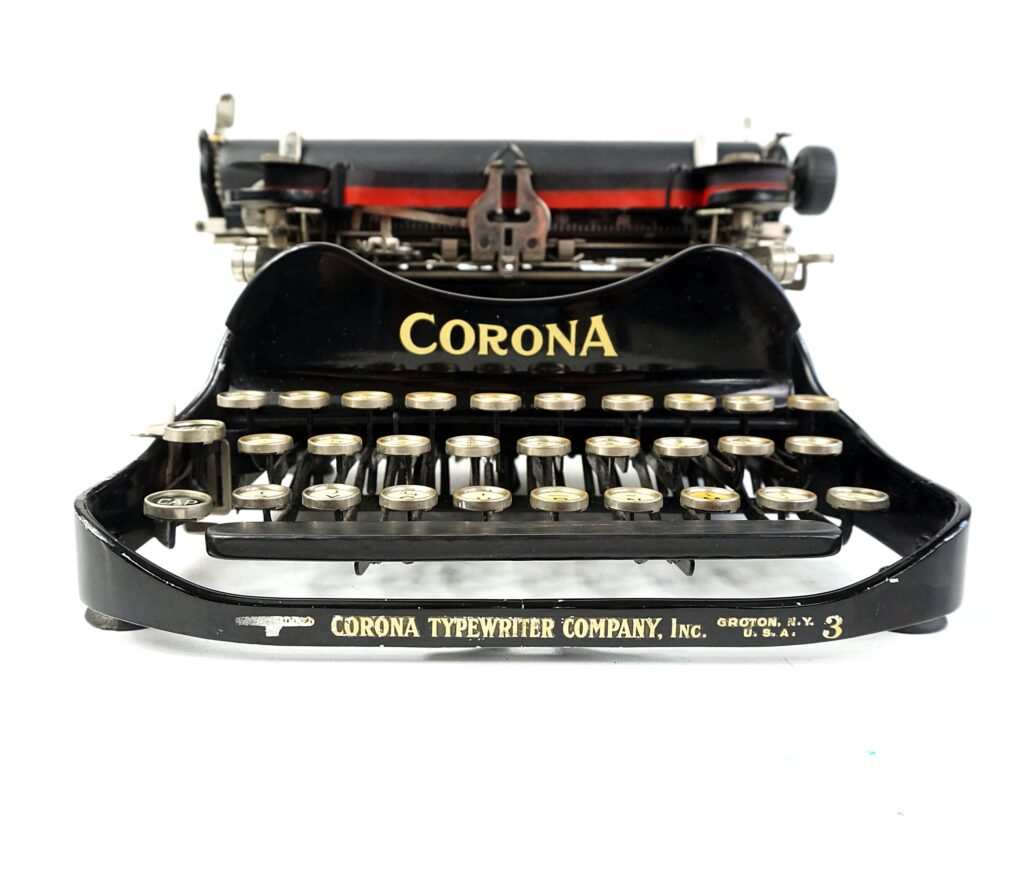
Corona No. 3 Folding Typewriter, 1920
The Corona No. 3 folds its carriage forward over the three-row keyboard, creating a compact machine that fits into its carrying case.
My Cup of Retro restored this 1920 example, reconditioned its platen and preserved its original case and cleaning brush.
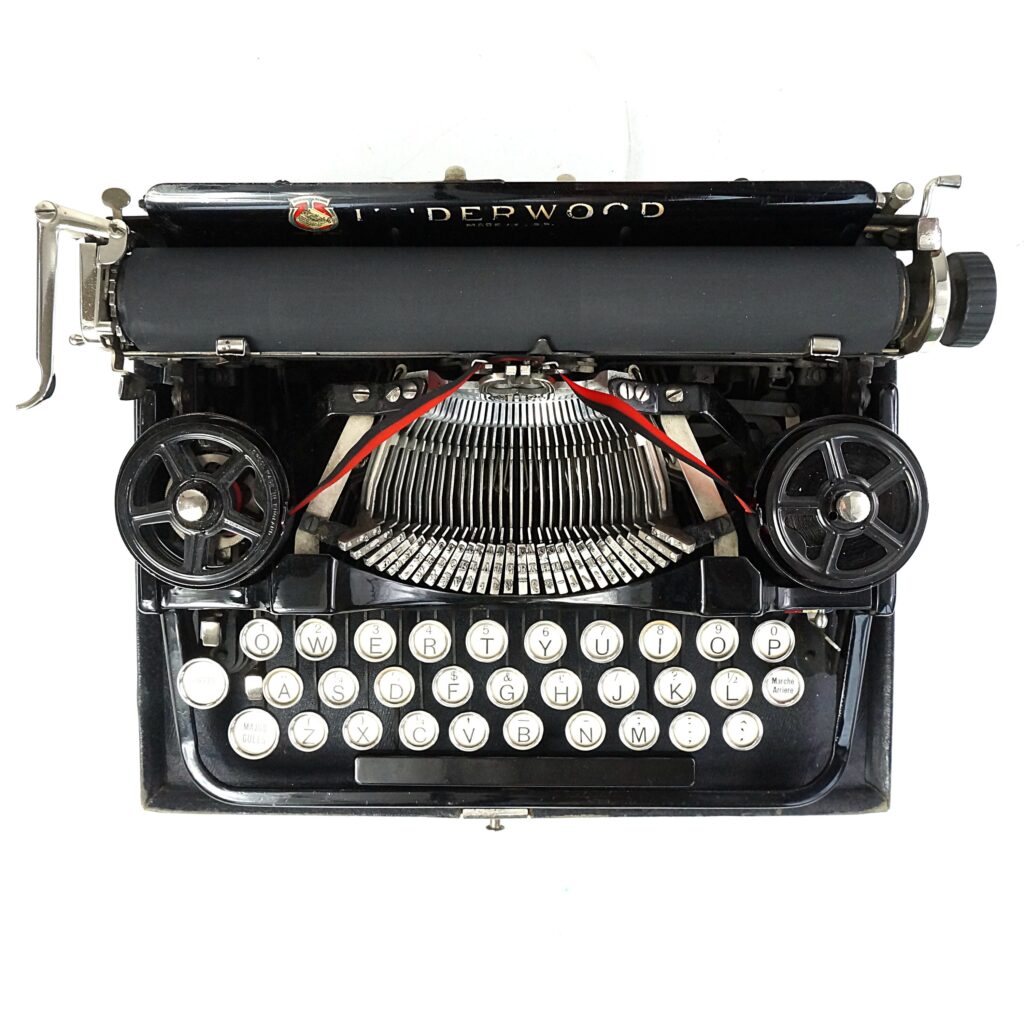
Underwood Portable 3-Bank Typewriter, 1924
The Underwood Portable 3-Bank used a compact three-row keyboard with double-shift keys. Its fixed carriage distinguished it from folding portable machines such as the Corona No. 3.
My Cup of Retro restored this 1924 example with a new platen, feed rollers and rubber feet. Its original carrying case also survived.